 Book a Free Property Management Consult
 (801) 820-0806
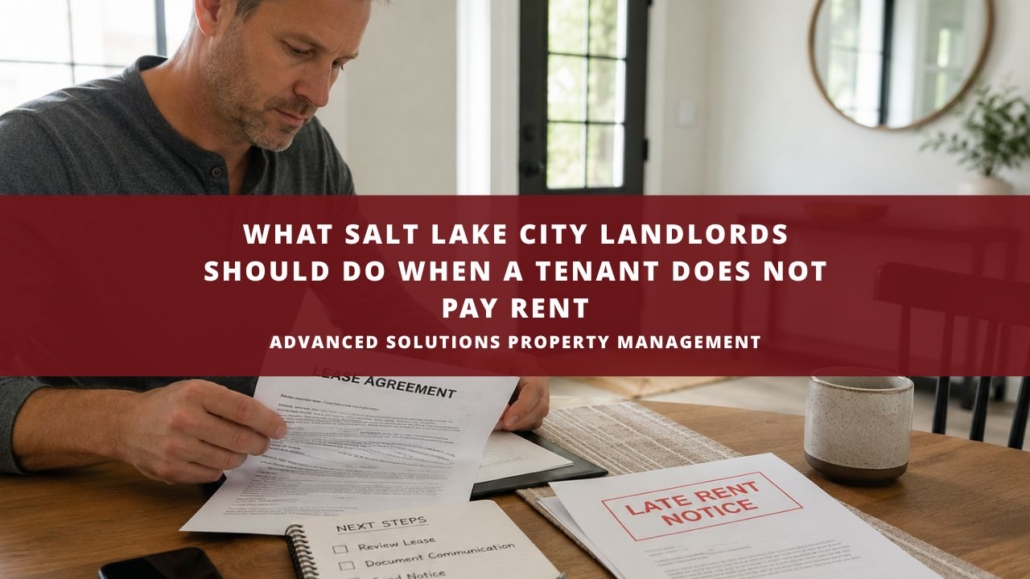
What Salt Lake City Landlords Should Do When a Tenant Does Not Pay Rent
When a tenant does not pay rent, it can put immediate pressure on your rental property’s cash flow. Mortgage payments, insurance, repairs, taxes, and other ownership costs do not stop just because rent is late.
Advanced Solutions Property Management works with rental property owners in Salt Lake City and surrounding Utah communities who want to handle these situations correctly, without letting emotion or delay make the problem worse.
Key Takeaways
- Late rent should be handled quickly, but not carelessly. Start by confirming what the lease says.
- Documentation matters. Every reminder, notice, payment record, and tenant response should be saved.
- A friendly reminder may solve a one-time issue, but repeat problems usually require a firmer process.
- Pay or quit notices should be handled properly so the landlord does not create delays later.
- Professional management can help reduce missed rent issues through screening, lease enforcement, and consistent rent collection.
Start With the Lease Before Taking Action
The first step is simple: check the lease.

Reviewing the lease is the first step when rent is late.
Before sending notices or threatening eviction, confirm:
- The rent due date
- Whether the lease includes a grace period
- When late fees apply
- How rent must be paid
- What the lease says about nonpayment
Many leases say rent is due on the first of the month, but some allow a short grace period. If the final day of the grace period falls on a holiday or weekend, the timing may need to be handled carefully depending on the lease terms and applicable law.
This is why landlords should never rely on memory alone. A written lease gives you the foundation for what happens next.
Strong lease language also helps prevent confusion before rent ever becomes late. For owners reviewing their leasing process, understanding what tenant screening can cost is useful because proper screening can reduce the risk of repeated late payments.
Confirm the Rent Is Actually Unpaid
Before escalating the issue, double check your records.

Accurate records help landlords confirm unpaid rent and respond properly.
This sounds obvious, but mistakes happen. A tenant may have paid through a portal, mailed a check, sent payment to the wrong place, or made a partial payment that has not been properly recorded.
Review:
- Online payment records
- Bank deposits
- Mailed payments
- Communication from the tenant
- Any partial payment history
- Late fee calculations
Rental income and expenses should be tracked carefully because rental property ownership depends on accurate financial records, especially when owners are managing payments, deductions, repairs, and operating costs. Rental real estate recordkeeping is not something to clean up only at tax time. If the rent is unpaid, move forward calmly and professionally.
Send a Polite Reminder When It Makes Sense
Not every late payment is intentional.
Sometimes a tenant forgets. Sometimes a payment fails. Sometimes a check is delayed. A quick reminder can solve the issue without damaging the landlord-tenant relationship.
A simple message can say:
“Hi, just a reminder that rent has not been received yet for this month. Please confirm when payment will be submitted.”
Keep it short. Do not argue. Do not accuse. Do not make threats in a casual text message.
This approach is best for tenants with a good payment history who are late for the first time or have a reasonable explanation. If late rent has become a pattern, skip the friendly reminder and follow the formal process.
Send a Formal Nonpayment Notice
If the tenant does not respond or the problem is recurring, send a formal nonpayment notice.

This notice should clearly explain:
- The amount of unpaid rent
- Any late fees allowed by the lease
- The date payment was due
- The deadline to resolve the issue
- What may happen if payment is not made
The goal is not to scare the tenant. The goal is to create a clear written record and give the tenant a formal opportunity to fix the problem.
Documentation is critical. Save the notice, delivery proof, emails, text messages, phone notes, and payment records. If the matter eventually reaches court, organized documentation can make a major difference.
Tenant communication issues often show up in more than one area of the rental relationship. Owners who deal with frequent disputes may also benefit from understanding common tenant complaints landlords should be prepared for, since communication patterns often affect rent collection, maintenance, and renewals.
Serve a Pay or Quit Notice Properly
If the tenant still does not pay, the next step is often a pay or quit notice.
This type of notice generally gives the tenant a specific number of days to either pay the overdue rent or leave the property. The exact requirements can depend on state law, lease language, and the property type.
Delivery matters. A notice that is prepared correctly but delivered incorrectly can create problems later. Landlords should be careful about how the notice is served, whether by mail, in person, or another accepted method.
Do not improvise this step. If you are unsure, speak with a qualified attorney before moving forward.
Nonpayment situations can also become more complicated when the tenant receives housing assistance or the rental is subject to additional rules. Nonpayment of rent procedures can vary depending on the housing program involved, so landlords should understand what applies to their specific rental.
Do Not Make Empty Threats
One of the biggest mistakes landlords make is saying they will evict but not following through.
If a tenant learns that deadlines do not matter, the problem can continue. That does not mean a landlord should rush into eviction over every late payment, but once a formal process begins, consistency matters.
If the tenant pays, document the payment and update the file. If the tenant does not pay, move to the next step.
If there is a co-signer on the lease, they may need to be included in notices or communication depending on the lease and legal requirements. This is another reason proper documentation matters from day one.
File for Eviction When Necessary
Eviction should not be the first move, but sometimes it becomes necessary.
If the tenant does not pay, does not leave, and does not resolve the issue within the required timeline, the landlord may need to file for eviction through the proper legal process.
At this point, delays can become expensive. Every additional week without rent affects the property’s income and may increase the owner’s losses.
Rental property can be a strong long-term investment, but it still comes with tenant risk, operating costs, vacancies, repairs, and management challenges. Owning rental property requires planning for both income and risk, not just collecting rent when everything goes smoothly.
Landlords should also avoid self-help actions. Do not change locks, remove belongings, shut off utilities, or try to force the tenant out outside the legal process.
Reduce Future Risk With Better Systems
The best time to deal with unpaid rent is before it happens.

Reviewing the lease is the first step when rent is late.
That means having:
- Strong tenant screening
- Clear lease terms
- Online rent collection
- Consistent late fee enforcement
- Written communication procedures
- Proper move-in documentation
- A clear process for notices
Property managers help by creating structure. Instead of reacting emotionally, the process is already set. Rent is tracked. Reminders are sent. Notices are documented. Lease terms are enforced.
Late rent can also connect to other property issues. For example, if a tenant stops paying and later leaves damage behind, owners need to understand the difference between tenant damage and normal wear and tear so they handle deposits and repairs correctly.
Final Thoughts
When a tenant does not pay rent, the worst thing a landlord can do is ignore it and hope it works itself out. Start with the lease, confirm the facts, communicate professionally, document everything, and follow the proper legal process if payment is not made.
Advanced Solutions Property Management helps Salt Lake City rental property owners handle rent collection, lease enforcement, tenant communication, and difficult situations with a more organized process.
- Rental KPIs That Matter: How Investors Track Performance - September 22, 2026
- Utah Security Deposit Laws - July 30, 2026
- How Salt Lake City Landlords Can Protect Their Property From Squatters - July 10, 2026

